Tate Modern
About the Museum
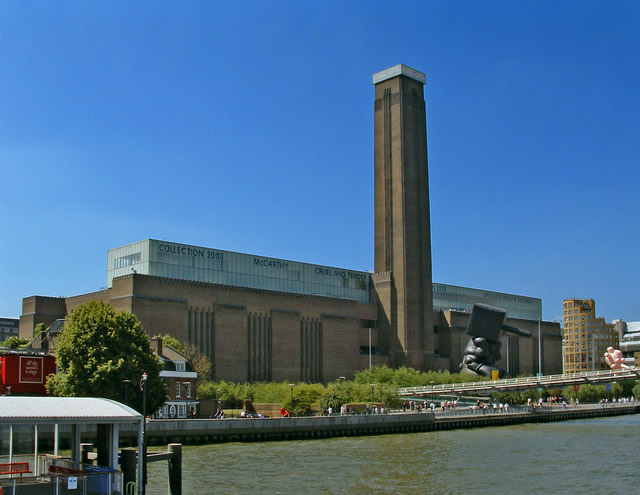
Tate Modern is Britain's national museum of modern and contemporary art and one of the most visited art museums in the world. It occupies the former Bankside Power Station on the south bank of the Thames, opposite Saint Paul's Cathedral, a brick cathedral of industry designed by Giles Gilbert Scott and converted by the Swiss architects Herzog and de Meuron. It opened in May two thousand, and the twisted brick tower of the Blavatnik Building was added in twenty sixteen.
The collection displays are free and cover art from around nineteen hundred to the present: Monet, Cézanne, Picasso, Matisse, Kandinsky, Malevich, Mondrian, Duchamp, Dalí, Rothko, Pollock, Warhol, Lichtenstein, Bourgeois and a growing range of artists from Latin America, Africa, Asia and the Middle East. The two buildings are joined at ground level by the Turbine Hall, the vast empty space where a single commissioned installation is shown each year, and at the fourth floor by a bridge.
Unlike most museums, Tate Modern does not hang its collection chronologically. Rooms are grouped by theme and are rehung frequently, so a work you saw on one visit may be resting in store or lent abroad on the next. This guide picks the works and spaces that have been fixtures for many years, but check the museum's website on the day. Allow two to three hours for the collection and add time for the Turbine Hall, the Tanks and the river views from the terraces.
Before You Go
- Entry to the collection displays is free; ticketed exhibitions are on Level 3 of the Natalie Bell Building and Level 2 of the Blavatnik Building.
- The Turbine Hall entrance on Holland Street, down the ramp, gives the most dramatic first view; the riverside entrance is closer to the Millennium Bridge.
- Displays are rehung often; use the collection search on tate.org.uk to check whether a specific work is on view and in which room.
- Weekday mornings and Friday and Saturday evenings, when the museum stays open late, are the quietest times.
- Photography without flash is allowed in the collection displays but usually not in ticketed exhibitions.
- The Tanks on Level 0 of the Blavatnik Building hold performance and installation work and are worth a detour.
- Free cloakrooms are on Level 0 and Level 1; large luggage is not accepted.
Collection Areas
Highlights
12 works. Each work has a full written and audio guide.


