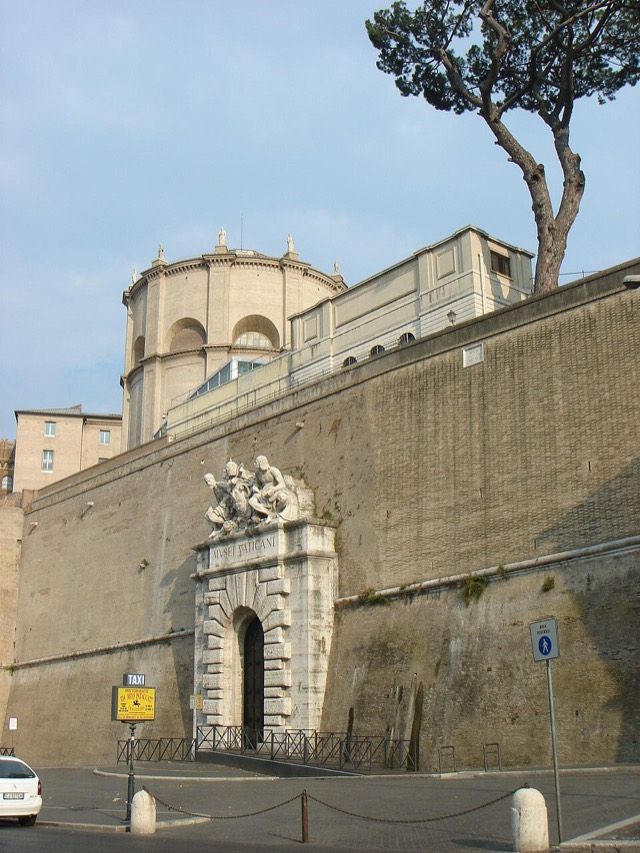
Vatican Museums
About the Museum
The Vatican Museums are the papal collections, built up over five centuries inside the palaces of the Vatican, and they are one of the largest museum complexes in the world. The route begins with the antique sculpture gathered by the Renaissance popes, passes through Egyptian and Etruscan galleries, a long corridor of tapestries and painted maps, the apartments frescoed by Raphael, and ends in the Sistine Chapel with the ceiling and Last Judgment by Michelangelo. A separate wing, the Pinacoteca, holds the picture gallery with Leonardo, Raphael and Caravaggio.
The experience is less a museum than a walk through a palace. Ceilings are painted, floors are ancient mosaic, and windows open onto courtyards and the gardens. Most visitors follow the signed one-way route towards the Sistine Chapel, which takes about two to three hours at a brisk pace. Crowds are heavy almost all year, so it is worth deciding in advance what you want to see and moving with purpose through the corridors.
A first-time visitor should give proper time to three places: the Octagonal Courtyard of the Pio-Clementino Museum with the Laocoon and the Apollo Belvedere, the Raphael Rooms, and the Sistine Chapel. If you have energy left, the Pinacoteca is quiet and rewards the detour. Silence is requested in the Sistine Chapel and photography is not allowed there.
Before You Go
- Book a timed ticket online in advance; the walk-up queue on the Viale Vaticano can take hours.
- The Sistine Chapel is at the end of the route, so plan your energy; a signed short route skips some galleries if you are pressed for time.
- Early morning or late afternoon slots are noticeably quieter than midday.
- Photography without flash is allowed in most galleries but not in the Sistine Chapel, where silence is also requested.
- Shoulders and knees should be covered, as the Sistine Chapel is a consecrated space.
- The Pinacoteca is close to the entrance and often nearly empty; visit it first or last.
- Large bags must be checked at the cloakroom near the entrance.
Collection Areas
Highlights
12 works. Each work has a full written and audio guide.


