National Museum of Western Art
About the Museum
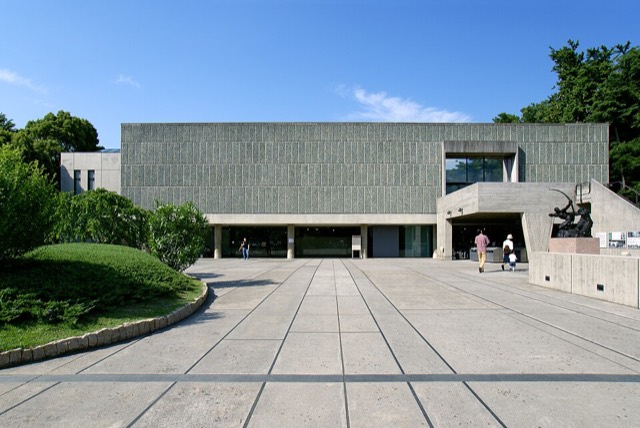
The National Museum of Western Art stands at the edge of Ueno Park in Tokyo, and it is Japan's only national museum devoted entirely to European art. It opened in 1959 around a single extraordinary gift: the Matsukata Collection, several hundred paintings, prints and sculptures gathered in Europe in the nineteen twenties by the shipbuilder Kojiro Matsukata, seized by France during the Second World War and returned to Japan as a gesture of renewed friendship. The building that received them was designed by Le Corbusier, his only work in East Asia, and in 2016 it was inscribed on the World Heritage List together with sixteen of his other buildings.
The collection now runs from the fourteenth century to the middle of the twentieth. On the upper floor of the main building you walk from Venetian and Flemish old masters through Rubens, Cranach and the French eighteenth century. The New Wing, added by Le Corbusier's pupil Kunio Maekawa in 1979, holds the Impressionists and their successors: Monet, Renoir, Van Gogh, Gauguin, Signac and a small group of twentieth century works including a Pollock. Rodin's bronzes, the heart of Matsukata's sculpture collection, greet you in the forecourt before you buy a ticket.
The museum is compact and can be seen comfortably in ninety minutes, which makes it a good companion to the other museums of Ueno. Come early on a weekday and you may have the Water Lilies almost to yourself.
Before You Go
- The forecourt with The Thinker, The Gates of Hell and The Burghers of Calais is open and free; you can see all three Rodin bronzes without a ticket.
- Follow the building as Le Corbusier intended: enter the low, dim entrance hall, climb the ramp into the tall Nineteenth Century Hall, then spiral up into the galleries.
- The permanent collection is displayed chronologically, old masters in the main building and Impressionists onward in the New Wing; special exhibitions in the basement wing need a separate ticket and draw the crowds.
- Photography without flash is allowed for most of the permanent collection, but individual loans and some recent acquisitions are marked as no photography.
- The museum is a three minute walk from the Park Exit of Ueno Station, and it sits between the Tokyo National Museum and the National Museum of Nature and Science, so plan a full day in the park.
- Free lockers and a cloakroom are available near the entrance; bring a coin for the lockers, it is returned.
Collection Areas
Highlights
12 works. Each work has a full written and audio guide.


