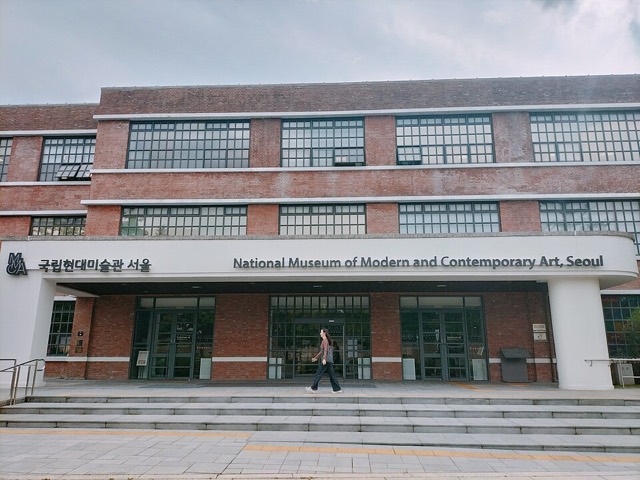
National Museum of Modern and Contemporary Art
About the Museum
The National Museum of Modern and Contemporary Art, known by its initials MMCA, is South Korea's national museum of art from the early twentieth century to the present. It has four branches: the original museum in a park at Gwacheon, south of the city; a historic wing at Deoksugung Palace devoted to early modern Korean art; an art storage and conservation centre at Cheongju; and the Seoul branch, opened in November twenty thirteen in Samcheong-dong, right beside Gyeongbokgung Palace. The Seoul branch is the one most visitors mean when they say MMCA, and it is the subject of this guide.
The Seoul building is a low, quiet complex of pale terracotta tiles and glass, designed by the architect Mihn Hyun-jun to sit modestly among the palace, the old houses of Bukchon and the galleries of Samcheong-dong. It is arranged around a series of open courtyards, or madang, in the manner of a traditional Korean house, and it incorporates two older structures: the Joseon dynasty office of the royal clan, Jongchinbu, and the red brick former military intelligence headquarters that stood on the site for decades.
There is no fixed permanent hang. Instead the eight galleries, the tall Seoul Box and the film theatre host a rolling programme of large exhibitions of Korean and international art, so what you see changes every few months. A first time visitor should enjoy the architecture and courtyards, pick one or two exhibitions rather than trying to see everything, and combine the visit with a walk to the palace and Bukchon Hanok Village next door.
Before You Go
- The Seoul branch is a short walk from Anguk station on subway line three; leave by exit one and follow Samcheong-ro along the palace wall.
- There is no permanent collection display in Seoul; check the exhibition programme before you visit and buy a combined ticket if several shows are on.
- The courtyards and the Jongchinbu buildings can be seen without a ticket, and the museum is pleasant to walk through as a shortcut between Samcheong-dong and Gyeongbokgung.
- Wednesday and Saturday evenings have late opening with free admission to most exhibitions; check the current schedule.
- Photography without flash is allowed in most exhibitions unless a label says otherwise.
- Lockers, a large art bookshop and cafes are on the ground floor; the terrace cafe looks onto the main madang.
- Allow time for Gwacheon on another day if you want to see the collection displays and Nam June Paik's video tower.
Collection Areas
Highlights
6 works. Each work has a full written and audio guide.


