Museums
Museum Walker

Museum Walker

Contact

Sign In

Enter your email and we will send you a sign-in link. No password needed.

By continuing you agree to our Privacy Policy and Terms of Service.

or
Continue with Google

Unlock the Full Guide

Read every room and listen to every work in all museums with premium.

Unlock Now

Already subscribed?

Renews automatically. Cancel anytime.

Choose Your Language

More languages are on the way.

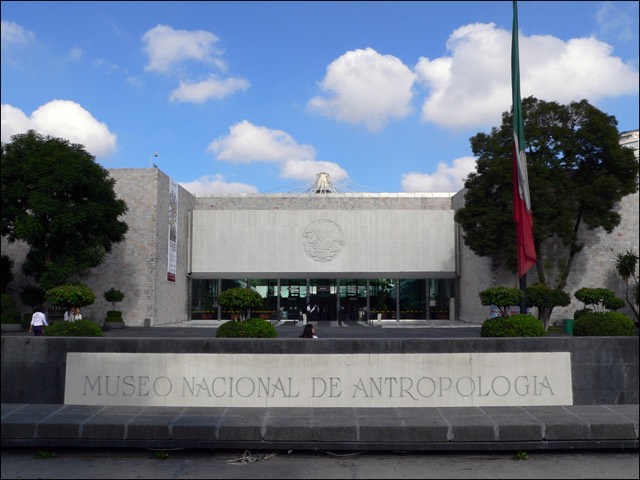
National Museum of Anthropology

Mexico City 🇲🇽
Anthropology / Archaeology12 guided works
See HighlightsStart VisitingMuseum MapGet DirectionsWebsite

About the Museum

The National Museum of Anthropology is the greatest museum of the ancient civilisations of the Americas and the most visited museum in Mexico. It holds the Sun Stone, the Coatlicue, the jade mask of the Maya king Pakal, Olmec colossal heads and tens of thousands of other objects from the Olmec, Teotihuacan, Toltec, Zapotec, Maya, Mexica and Gulf Coast cultures, as well as ethnographic collections on the Indigenous peoples of Mexico today.

The building itself is a landmark. Designed by Pedro Ramirez Vazquez and opened in nineteen sixty four in Chapultepec Park, it wraps around a vast courtyard shaded by a single concrete canopy on one column, with water falling around it. The archaeological halls run in a horseshoe on the ground floor, in roughly chronological and regional order: the origins of humans in the Americas, the Preclassic villages, Teotihuacan, the Toltecs, the Mexica, Oaxaca, the Gulf Coast, the Maya, the north and the west. The upper floor is devoted to the living Indigenous cultures, with houses, costumes and crafts.

You cannot see everything in one visit. Most first time visitors head straight for the Mexica hall at the far end of the courtyard, then choose between the Maya hall with Pakal's tomb and the Gulf Coast hall with the Olmec heads. Each hall also opens onto a garden with reconstructed temples and stelae, so step outside when you need air.

Before You Go

Collection Areas

1
Preclassic Central Highlands
Ground floor, east side of the courtyard
Village cultures of the valley of Mexico from about two thousand five hundred years before Christ, including the Tlatilco burials and figurines and early Cuicuilco.
1
2
Teotihuacan
Ground floor
The great Classic city north of Mexico City: the Chalchiuhtlicue monolith, a reconstruction of the Temple of the Feathered Serpent facade and painted murals.
9
3
Toltec and Tula
Ground floor
Warrior columns, Chac Mool figures and objects from Tula, Xochicalco and Cacaxtla between the fall of Teotihuacan and the rise of the Mexica.
4
Mexica (Aztec)
Ground floor, at the far end of the courtyard
The centrepiece of the museum: the Sun Stone, Coatlicue, the Stone of Tizoc, Xochipilli, the jaguar vessel and a model of Tenochtitlan.
5
Oaxaca
Ground floor, west side
Zapotec and Mixtec cultures of Monte Alban and Mitla, with the jade bat god mask, funerary urns and a reconstructed tomb.
6
Gulf Coast Cultures
Ground floor, west side
Olmec colossal heads and jade, the smiling figures of Veracruz and the Huastec Adolescent.
7
Maya
Ground floor, west side
Stelae, lintels and ceramics from the Maya lowlands, the funerary mask and reconstructed tomb of Pakal from Palenque, and replicas of the Bonampak murals in the garden.
8
Ethnography
Upper floor
The living Indigenous peoples of Mexico, region by region, with houses, textiles, masks and festival objects.
9
Entrance Plaza and Central Courtyard
Outside the entrance on Paseo de la Reforma and the central courtyard inside
The monolith by the road and the great umbrella roof over the courtyard are the two set pieces of Pedro Ramírez Vázquez's 1964 building. Both are seen before or between the galleries.
2

Highlights

12 works. Each work has a full written and audio guide.

The Sun Stone
The Sun Stone
About 1502 to 1521
Sala Mexica (Mexica Hall), ground floor
Coatlicue
Coatlicue
About 1439 or about 1500
Sala Mexica (Mexica Hall), ground floor
The Stone of Tizoc
The Stone of Tizoc
About 1481 to 1486
Sala Mexica (Mexica Hall), ground floor
Xochipilli, Prince of Flowers
Fifteenth to early sixteenth century
Sala Mexica (Mexica Hall), ground floor
The Tlaloc Monolith
The Tlaloc Monolith
Classic period, about first to seventh century
Entrance plaza, outside the museum on Paseo de la Reforma
Chalchiuhtlicue, the Great Goddess of Teotihuacan
About 200 to 500
Sala Teotihuacan (Teotihuacan Hall), ground floor
Olmec Colossal Head from San Lorenzo
About 1200 to 900 BC
Sala Culturas del Golfo (Gulf Coast Cultures Hall), ground floor
Funerary Mask of Pakal the Great
683
Sala Maya (Maya Hall), ground floor, tomb reconstruction
Jade Mask of the Bat God
About 100 BC to 200
Sala Culturas de Oaxaca (Oaxaca Cultures Hall), ground floor
The Huastec Adolescent
About 900 to 1250
Sala Culturas del Golfo (Gulf Coast Cultures Hall), ground floor
The Tlatilco Acrobat
About 1200 to 900 BC
Sala Preclásico del Altiplano Central (Preclassic Central Highlands Hall), ground floor
El Paraguas and the Central Courtyard
Pedro Ramirez Vazquez, with Jose Chavez Morado, 1964
Central courtyard