National Museum in Warsaw
About the Museum
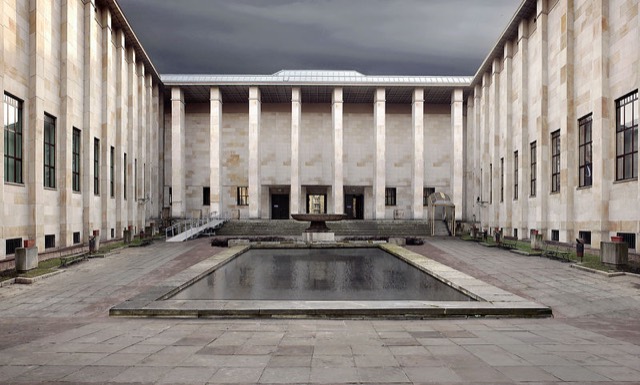
The National Museum in Warsaw is the largest museum in the Polish capital and one of the oldest in the country, founded in 1862 as the Museum of Fine Arts. It occupies a long, severe modernist building of pale stone on Aleje Jerozolimskie, completed in 1938 just in time to be looted and damaged in the Second World War, and rebuilt afterwards around a collection that its staff had hidden and then recovered piece by piece. Today it holds more than eight hundred thousand objects, from ancient Egypt and Greece to Polish design of the twentieth century.
The museum is best known for three things. The first is the Faras Gallery, a unique collection of early medieval wall paintings rescued by Polish archaeologists from a cathedral in Nubia before it vanished under the waters of the Aswan dam. The second is Polish painting of the nineteenth century, above all Jan Matejko's colossal Battle of Grunwald and his melancholy court jester Stańczyk, together with the finest works of Chełmoński, Gierymski, Malczewski, Boznańska and Wyspiański. The third is a fine European collection with a Botticelli, a Cranach and Dutch and Flemish masters, and a Gallery of Medieval Art full of carved and painted altarpieces from Silesia, Pomerania and Prussia.
The galleries are arranged over three floors around two courtyards. Faras, medieval art and old European painting are on the ground floor; nineteenth century Polish art is on the first floor; twentieth century art and design are above. Allow at least three hours.
Before You Go
- The Battle of Grunwald has its own room in the Gallery of 19th Century Art on the first floor; it is the one work everyone comes for, so see it early or late in the day.
- The Faras Gallery on the ground floor is dimly lit to protect the wall paintings; give your eyes a minute to adjust.
- Photography without flash is allowed in the permanent galleries.
- The museum is a fifteen minute walk from the Old Town along Nowy Świat, and Muzeum Narodowe bus stops are directly outside on Aleje Jerozolimskie.
- The Polish Design Gallery on the upper floor is a good place to end, with furniture, ceramics, posters and toys from the whole twentieth century.
- Stańczyk is in Warsaw, not Kraków; the other famous Matejko paintings, including Kościuszko at Racławice, are in the National Museum in Kraków.
Collection Areas
Highlights
12 works. Each work has a full written and audio guide.


