Museums
Museum Walker

Museum Walker

Contact

Sign In

Enter your email and we will send you a sign-in link. No password needed.

By continuing you agree to our Privacy Policy and Terms of Service.

or
Continue with Google

Unlock the Full Guide

Read every room and listen to every work in all museums with premium.

Unlock Now

Already subscribed?

Renews automatically. Cancel anytime.

Choose Your Language

More languages are on the way.

National Museum in Kraków

Kraków 🇵🇱
Art / History12 guided works
See HighlightsStart VisitingGet DirectionsWebsite

About the Museum

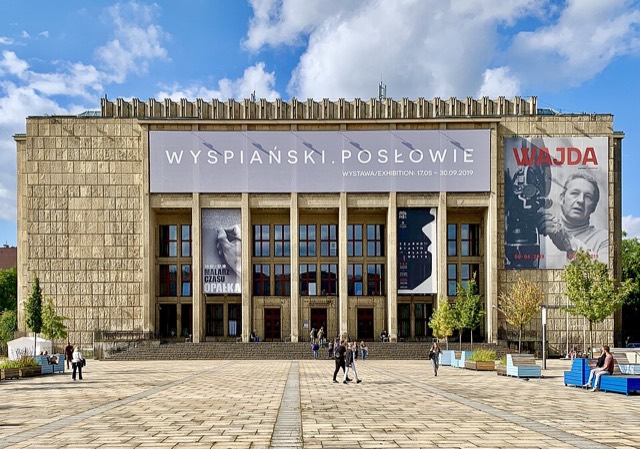
The National Museum in Kraków is the oldest national museum in Poland, founded in eighteen seventy nine when the painter Henryk Siemiradzki gave his huge canvas Nero's Torches to the city. It is not one building but a family of branches scattered across the old town and beyond, and that is the first thing to understand before you visit. The Main Building on Third of May Avenue holds twentieth century Polish art, arms and uniforms, and decorative arts. The Sukiennice, the Renaissance cloth hall in the middle of the Main Market Square, holds the nineteenth century Polish painting gallery upstairs. The Czartoryski Museum on Pijarska Street holds Leonardo's Lady with an Ermine and Rembrandt's Good Samaritan, and the Stanislaw Wyspianski Museum on Sikorskiego Square holds the pastels and designs of Kraków's beloved Art Nouveau genius.

Each branch has its own ticket, its own opening days and its own atmosphere. The Sukiennice is grand and gilded, with Matejko's battle scenes and Chelmonski's galloping horses under a glass roof. The Czartoryski is a quiet aristocratic house filled with antiquities, armour and mementoes of Polish history. The Main Building is a spacious modern museum with the best of Boznanska, Malczewski and the interwar avant garde.

A first time visitor with a single day should see the Lady with an Ermine in the morning, walk to the Sukiennice for the nineteenth century gallery, and finish at the Main Building or the Wyspianski Museum. Plan tickets in advance for the Czartoryski, where entry to the Leonardo is timed.

Before You Go

Collection Areas

1
Czartoryski Museum
Pijarska Street 15
The princely collection with Leonardo's Lady with an Ermine, Rembrandt's Good Samaritan, antiquities, Polish royal mementoes and Turkish trophies from Vienna.
2
2
Sukiennice: Gallery of Nineteenth Century Polish Art
Main Market Square 3, first floor
Four rooms named after Bacciarelli, Michalowski, Siemiradzki and Chelmonski, covering the Enlightenment, Romanticism, the academy and realism and early symbolism.
7
3
Main Building: Twentieth and Twenty First Century Polish Art
Third of May Avenue 1
From Boznanska and Malczewski through the Formists, Kantor and the postwar avant garde to contemporary work.
2
4
Main Building: Arms and Uniforms in Poland
Third of May Avenue 1
Hussar armour, sabres, firearms and uniforms from the Middle Ages to the Second World War.
5
Main Building: Decorative Art and Material Culture
Third of May Avenue 1
Goldsmith work, textiles, furniture and glass from medieval Kraków to Art Nouveau.
6
Stanislaw Wyspianski Museum
Sikorskiego Square 6
Pastels, stained glass cartoons, furniture and stage designs by the leading artist of Young Poland.
1
7
Other branches
Across Kraków
The Jan Matejko House, the Jozef Mehoffer House, the Bishop Erazm Ciolek Palace with medieval art, the Szolayski House and the Europeum gallery of European painting.

Highlights

12 works. Each work has a full written and audio guide.

Lady with an Ermine
Lady with an Ermine
Leonardo da Vinci, About 1489 to 1491
Czartoryski Museum branch, Pijarska Street 15, first floor, Leonardo room
Landscape with the Good Samaritan
Rembrandt van Rijn, 1638
Czartoryski Museum branch, Pijarska Street 15, first floor, European painting
Kościuszko at Racławice
Jan Matejko, 1888
Sukiennice branch, Gallery of Nineteenth Century Polish Art, Main Market Square 3, first floor, Siemiradzki Room
Nero's Torches
Nero's Torches
Henryk Siemiradzki, 1876
Sukiennice branch, Gallery of Nineteenth Century Polish Art, Main Market Square 3, first floor, Siemiradzki Room
Four-in-hand
Four-in-hand
Józef Chełmoński, 1881
Sukiennice branch, Gallery of Nineteenth Century Polish Art, Main Market Square 3, first floor, Chełmoński Room
Frenzy of Exultations
Władysław Podkowiński, 1894
Sukiennice branch, Gallery of Nineteenth Century Polish Art, Main Market Square 3, first floor, Chełmoński Room
Wernyhora
Wernyhora
Jan Matejko, 1883 to 1884
Sukiennice branch, Gallery of Nineteenth Century Polish Art, Main Market Square 3, first floor, Siemiradzki Room
The Charge in the Somosierra Gorge
Piotr Michałowski, About 1837
Sukiennice branch, Gallery of Nineteenth Century Polish Art, Main Market Square 3, first floor, Michałowski Room
Death of Ellenai
Death of Ellenai
Jacek Malczewski, 1883
Sukiennice branch, Gallery of Nineteenth Century Polish Art, Main Market Square 3, first floor, Chełmoński Room
Girl with Chrysanthemums
Olga Boznańska, 1894
Main Building, Third of May Avenue 1, Gallery of Twentieth and Twenty First Century Polish Art
Motherhood
Motherhood
Stanisław Wyspiański, 1905
Stanislaw Wyspianski Museum branch, Sikorskiego Square 6, permanent gallery
Polish Hussar Half Armour
Seventeenth century
Main Building, Third of May Avenue 1, Gallery of Arms and Uniforms in Poland