National Art Center
About the Museum
The National Art Center, Tokyo is unusual among the world's great museums because it owns nothing. It opened in January 2007 in Roppongi as an empty vessel, a kunsthalle on a huge scale, with about fourteen thousand square metres of exhibition space spread over three floors and no permanent collection at all. Instead it hosts a constant rotation of shows: large loan exhibitions organised with foreign museums and newspapers, from Monet and Vermeer to Yves Saint Laurent and contemporary anime, alongside the annual public exhibitions of Japan's artist associations, which fill the ground floor with thousands of works by living painters, calligraphers and sculptors.
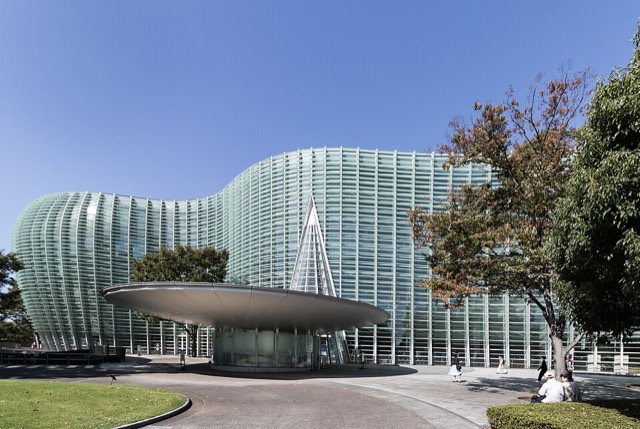
The building is the reason to come even when nothing on the programme appeals. It was the last major work of Kisho Kurokawa, a founder of the Metabolist movement, who died nine months after it opened. Its glass facade ripples like a curtain along the edge of a small wood, and inside a vast atrium rises the full height of the building, crossed by walkways and interrupted by two enormous inverted concrete cones with a cafe and a restaurant balanced on top. The entrance hall, the atrium, the art library and the shops are free, so many people come simply to sit in the light.
The centre is one point of the Roppongi Art Triangle, with the Mori Art Museum and the Suntory Museum of Art a short walk away, and a ticket from one gives a discount at the others.
Before You Go
- The building, atrium, art library, cafes and museum shop are free to enter; you only pay for the exhibition you choose, and each exhibition has its own ticket.
- The closest station is Nogizaka on the Chiyoda line, whose exit six connects directly to the museum; Roppongi station is about five minutes on foot.
- Big loan exhibitions are crowded at weekends and in the first and last weeks of their run; weekday mornings are calmest, and the museum is closed on Tuesdays.
- Photography is generally allowed in the atrium and public spaces but usually not inside exhibition galleries, where the rules are posted at the entrance.
- Show your ticket at the Mori Art Museum or the Suntory Museum of Art for a discount as part of the Roppongi Art Triangle.
- The Brasserie Paul Bocuse Le Musee on top of the large cone takes reservations for dinner but runs a queue at lunchtime; the Salon de The on the lower cone is easier.
Collection Areas
Highlights
6 works. Each work has a full written and audio guide.


