Musée d'Orsay
About the Museum
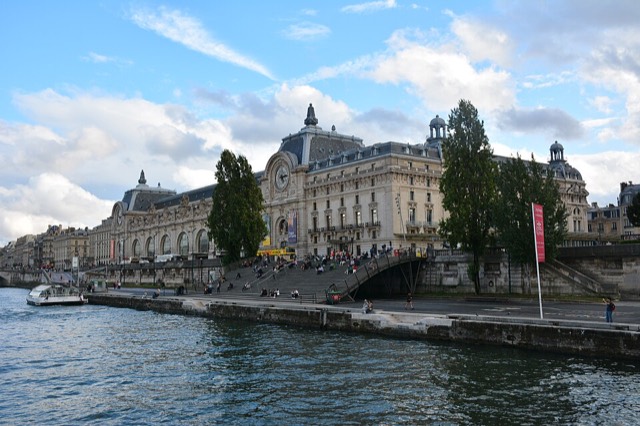
The Musée d'Orsay holds the world's richest collection of French art from 1848 to 1914, the decades that run from Realism through Impressionism to the first stirrings of modern painting. It occupies the former Gare d'Orsay, a Beaux-Arts railway station built for the Paris World's Fair of 1900 and converted into a museum in 1986. The great iron and glass vault, the giant station clocks and the long central nave still announce the building's first life, and the light that once fell on platforms now falls on sculpture.
The collection is arranged chronologically and by movement across three main levels. The ground floor covers the years before 1870: Ingres and Delacroix, the Realists Courbet and Millet, early Manet and the Academic painters they rebelled against. The upper level, reached by escalator, holds the famous Impressionist galleries with Monet, Renoir, Degas, Pissarro and Sisley under the attic skylights. The middle level is given to Post-Impressionism, Van Gogh, Gauguin, Cézanne, Seurat and the Nabis, together with Art Nouveau furniture and decorative arts.
First-time visitors should expect crowds around the Impressionist rooms and plan a route rather than trying to see everything. Two or three hours is enough for the major works, and the museum rewards a slower pace on the quieter ground floor where the story of modern painting really begins.
Before You Go
- Book a timed ticket online and use the entrance for ticket holders on the Seine side; the walk-up queue can be long.
- Go straight to the upper level Impressionist galleries first thing in the morning or in the last hour, then work down through the building.
- The big station clock on the upper level, seen from behind, is one of the best photo spots in Paris; photography without flash is allowed in the permanent collection.
- The museum is closed on Mondays, and late openings on Thursdays are noticeably calmer than weekend afternoons.
- Free cloakroom lockers are available near the entrance, and large bags must be checked.
- The Musée de l'Orangerie across the river, with Monet's Water Lilies, is included in a combined ticket and makes a natural second stop.
Collection Areas
Highlights
12 works. Each work has a full written and audio guide.


