Galleria dell'Accademia
About the Museum
The Galleria dell'Accademia is a small museum with one very large reason to visit. Michelangelo's David has stood under its skylit dome since eighteen seventy three, and most of the two million people who come each year are here to see him. The museum grew out of the Academy of Fine Arts next door, founded in seventeen eighty four by Grand Duke Peter Leopold as a teaching collection, which is why it holds so many altarpieces from suppressed Florentine churches and convents, and a room full of plaster models used by students.
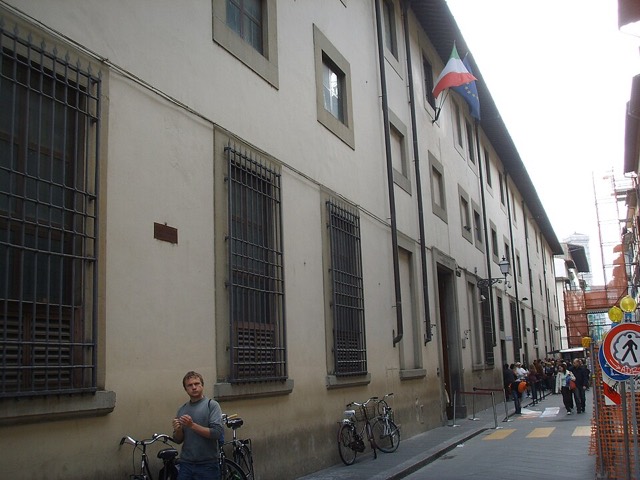
The building is a converted hospital and convent on Via Ricasoli, a short walk north of the Duomo. The route is simple. You enter the Hall of the Colossus with its huge model by Giambologna and its fifteenth-century paintings, then walk down the long Hall of the Prisoners, where Michelangelo's unfinished figures struggle out of their marble blocks, towards the Tribune and the David. Side galleries hold the gold-ground altarpieces of the thirteenth and fourteenth centuries, the plaster casts of Lorenzo Bartolini, and the Medici collection of musical instruments with its Stradivari viola and early pianos by Cristofori.
A first-time visitor should book a timed ticket, allow ninety minutes, and resist the urge to rush to the David. The Prisoners are best seen slowly on the way in, and the medieval rooms upstairs are almost always quiet.
Before You Go
- Book a timed entry ticket online well in advance; the queue for tickets on the day can last two hours in high season.
- Early morning and late afternoon are quietest around the David; midday brings the largest tour groups.
- Walk the Hall of the Prisoners slowly before you reach the Tribune, since most people rush past the unfinished figures.
- Photography without flash is allowed, and tripods and selfie sticks are not.
- Large bags and backpacks must be checked at the cloakroom near the entrance.
- The upper floor with the gold-ground altarpieces is reached by a staircase near the Tribune and is often empty.
Collection Areas
Highlights
10 works. Each work has a full written and audio guide.


