Cité des Sciences et de l'Industrie
About the Museum
The Cité des Sciences et de l'Industrie is the largest science museum in Europe, a vast glass and steel building at the northern edge of the Parc de la Villette in the nineteenth arrondissement of Paris. It opened on 13 March 1986, the day Halley's Comet was closest to the Earth, inside the enormous concrete shell of an abattoir sale hall that had been abandoned unfinished in the 1970s. The architect Adrien Fainsilber turned that white elephant into a cathedral of science, ringed by moats, lit by glass greenhouses and a pair of rotating cupolas, and faced across the water by the mirrored sphere of the Géode.
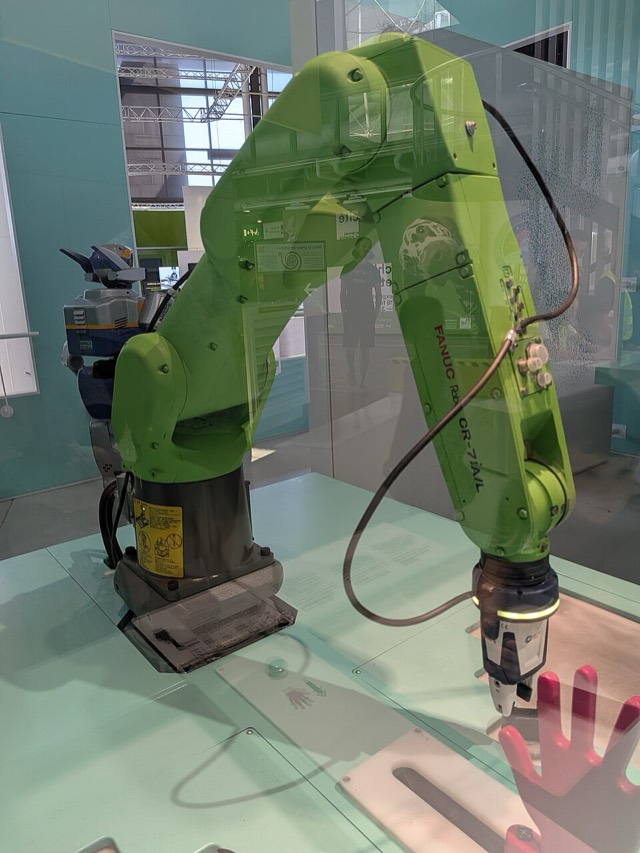
Inside, the permanent galleries are grouped under the name Explora on the upper two levels, covering the universe, the brain, genetics, mathematics, sound, light, energy and robots, with a planetarium and a run of temporary exhibitions. Below them the Cité des enfants offers hands on science for children from two to ten years old, and outside on the canal bank the decommissioned submarine Argonaute can be boarded. There is also a science library, a health information centre, a fab lab and a cinema.
The Cité is run together with the Palais de la Découverte as Universcience. It draws well over two million visitors a year, many of them families and school groups, so plan around them: book timed slots for the children's areas and the submarine, pick two or three themes rather than trying to see everything, and leave time to walk the park outside, with its red follies by Bernard Tschumi and the Géode gleaming across the lawns.
Before You Go
- The nearest metro is Porte de la Villette on line 7; the entrance is on avenue Corentin Cariou, and the Géode and the submarine are behind the building on the park side.
- The Cité des enfants and the Argonaute run on timed slots that sell out in school holidays; book them online before you arrive.
- The planetarium is included in the exhibition ticket but seats are limited, so reserve a session when you buy.
- Explora is spread over two large levels; pick the themes that interest you most and allow half a day rather than trying to cover everything.
- The Argonaute submarine has narrow ladders and hatches and is not suitable for pushchairs or visitors with limited mobility.
- The Parc de la Villette outside is free and worth an hour, with the Géode, the canal, the Tschumi follies and the Philharmonie at the far end.
Collection Areas
Highlights
7 works. Each work has a full written and audio guide.


