British Museum
About the Museum
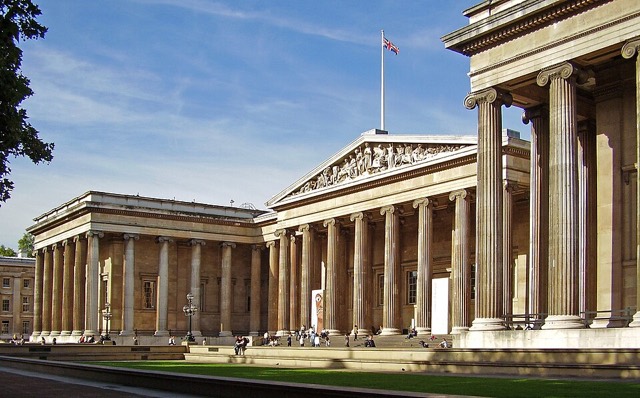
The British Museum was founded in seventeen fifty three as the first national public museum in the world, and it remains free to enter. Its collection of about eight million objects covers two million years of human history from every continent, and around eighty thousand of them are on display in the Greek Revival building on Great Russell Street in Bloomsbury. The museum is not about Britain; it is about the world, and about how cultures compared and connected.
The building is organised around the Great Court, a vast square covered in two thousand with a glass and steel roof by Norman Foster, with the round Reading Room at its centre. From the court, galleries fan out on three levels. The ground floor holds the heavyweights: Egyptian sculpture, the Assyrian palace reliefs, the Parthenon sculptures and the galleries of Africa, the Americas and the Pacific. The upper floor holds Egyptian mummies, prehistoric and Roman Britain, medieval Europe, the ancient Near East and the Enlightenment gallery in the old King's Library.
A first-time visitor cannot see everything, and should not try. Pick a route of ten or twelve objects, allow half a day, and accept that the Rosetta Stone and the mummies will be crowded. The quieter galleries of Asia, the Americas and Room 2, the collecting the world gallery, reward anyone who wanders. Debate about where some objects belong, above all the Parthenon sculptures and the Benin Bronzes, is part of the museum's story and is acknowledged on its labels.
Before You Go
- Entry is free, but booking a free timed ticket online lets you use a faster queue at the main gate on Great Russell Street.
- The Montague Place entrance at the back is usually quieter than the main entrance.
- Weekday mornings right after opening and Friday evenings, when the museum stays open late, are the calmest times.
- The Rosetta Stone, the Egyptian sculpture gallery and the Parthenon galleries are all on the ground floor and can be seen in one loop.
- Photography without flash is allowed in the permanent galleries.
- Large luggage is not admitted; small bags can be left in the cloakroom for a fee.
- Room numbers are marked on floor plans at the information desk in the Great Court and are used on the labels.
Collection Areas
Highlights
12 works. Each work has a full written and audio guide.


