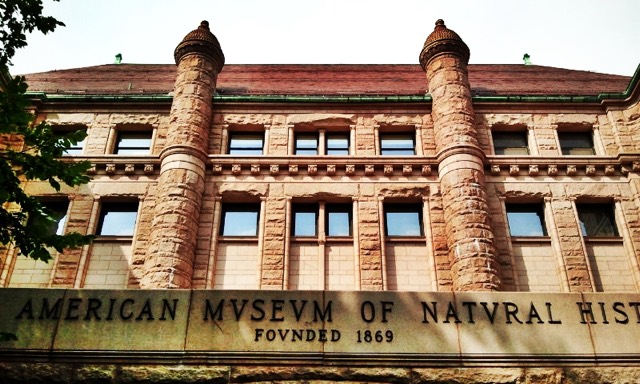
American Museum of Natural History
About the Museum
The American Museum of Natural History occupies four city blocks on the west side of Central Park and holds more than thirty four million specimens and artefacts, from meteorites and dinosaurs to the largest collection of insects in the world. Founded in 1869, it grew through the great expeditions of the early twentieth century, when its scientists brought back dinosaur skeletons from Mongolia and Wyoming, meteorites from Greenland and whole ecosystems in the form of dioramas. Its halls have shaped how the world pictures nature, and its Rose Center for Earth and Space, a glass cube around a planetarium sphere, is one of the landmarks of New York.
The museum is a complex of interconnected buildings on five levels. The dinosaurs and fossil mammals fill the fourth floor in a loop that follows the tree of life. The first floor has the Hall of Ocean Life with its blue whale, the Hall of Meteorites and the Halls of Gems and Minerals. The second floor holds the African and Asian mammal dioramas and the halls devoted to the peoples of Africa, Asia and the Pacific. The Gilder Center, opened in 2023, adds an insectarium, a butterfly vivarium and a soaring atrium of sculpted concrete.
A first visit works best as a loop: start beneath the rearing Barosaurus in the rotunda, take the elevator to the fourth floor dinosaurs, come down through the mammals and finish under the whale. Allow at least four hours.
Before You Go
- General admission is pay what you wish for residents of New York, New Jersey and Connecticut with proof of address; everyone else pays a fixed price, and timed tickets booked online are strongly recommended.
- The subway entrance at 81st Street brings you straight into the lower level, avoiding the queue on the front steps facing Central Park West.
- Go to the fourth floor dinosaur halls first; they are the most crowded part of the museum by late morning.
- The dioramas in the Akeley Hall of African Mammals and the Hall of North American Mammals are the museum's great works of art and reward slow looking.
- The Hayden Planetarium space show and the Butterfly Vivarium need separate timed tickets.
- Photography without flash is allowed throughout the permanent halls.
Collection Areas
Highlights
11 works. Each work has a full written and audio guide.


